Published November 2, 2026 · Story period: Federal payments from January 2023 · B.C. claims open until January 11, 2027 · Manitoba approved June 2026
Manitoba: C$129 million settlement, about C$3,000 up to C$100,000 per person. B.C.: up to C$60 million, up to C$91,000 per person. Federal: about C$28 million in aggregate damages; C$5,469.85 equal share, up to C$50,000 on the claims grid, more only if a judge decides. Ontario: C$30 million upheld on appeal in 2021.
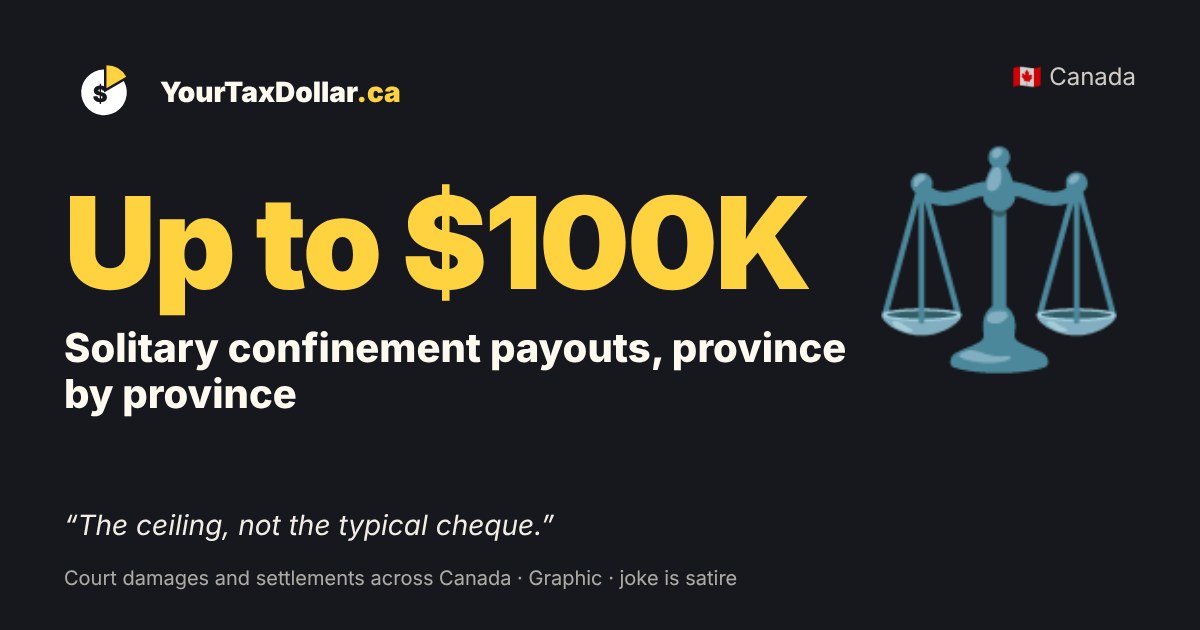
The claim doing the rounds online is that inmates are getting cheques of up to $100,000 for time spent in solitary confinement. It’s true — in some provinces, for some people. The full picture depends on which government held them.
Courts across Canada have found that long stretches of solitary confinement, and any amount for people with serious mental illness, can violate the Charter of Rights and Freedoms. Governments have been paying ever since, through court-ordered damages and negotiated settlements.
Manitoba has the biggest top cheque. A judge approved a $129-million settlement in June 2026 covering people held in segregation in provincial jails. Adults start at about $3,000 and youth at about $9,000, with a maximum of $100,000 for long periods in segregation or specific, provable harm. The province settled without admitting liability.
British Columbia agreed to settle for up to $60 million. People held in segregation in a B.C. correctional centre for 15 or more days in a row, or while B.C. Corrections knew or ought to have known of a mental illness, can receive up to $91,000. Claims opened January 10, 2026 and close January 11, 2027.
Federal prisons paid far less per person. Three class actions — Brazeau, Reddock and Diggs — led to about $28 million in aggregate damages, paid out from January 2023. Every eligible claimant received an equal share of $5,469.85. A second claim could add up to $50,000 under a court-approved grid, and only a full hearing before a judge has no set cap.
Ontario’s provincial jails faced a separate case. In 2021, Ontario’s Court of Appeal upheld $30 million in damages for people held in provincial segregation.
Bottom line: “up to $100,000” is real, but it’s the ceiling, not the typical cheque. Most people receive a few thousand dollars; the top amounts go to people who spent the longest in isolation or can prove serious harm.
What the headline leaves out
These payments are compensation for rights violations found by courts or settled to avoid trial, not a spending program anyone chose. Maximums depend on time in segregation, mental illness and proven harm. Amounts are before legal fees and other deductions.
The roast
Satire: The government spent years defending solitary confinement in court. The court’s verdict: you can stay in a room alone and think about what you did. Then pay.
Satire. No personal tax share is calculated for this record.
What's your share?
Explore your estimated income tax for this country. This does not mean you personally funded the specific project.
Calculate my tax estimate →Check the sources
- CP24 / Canadian Press — Manitoba judge approves $129M settlement (June 2026)
- B.C. settlement approval notice (January 2026)
- Federal claims administrator — FAQ and compensation grid
- Correctional Service Canada — Administrative segregation class actions
- JURIST — Ontario appeal court affirms $30 million damages (2021)